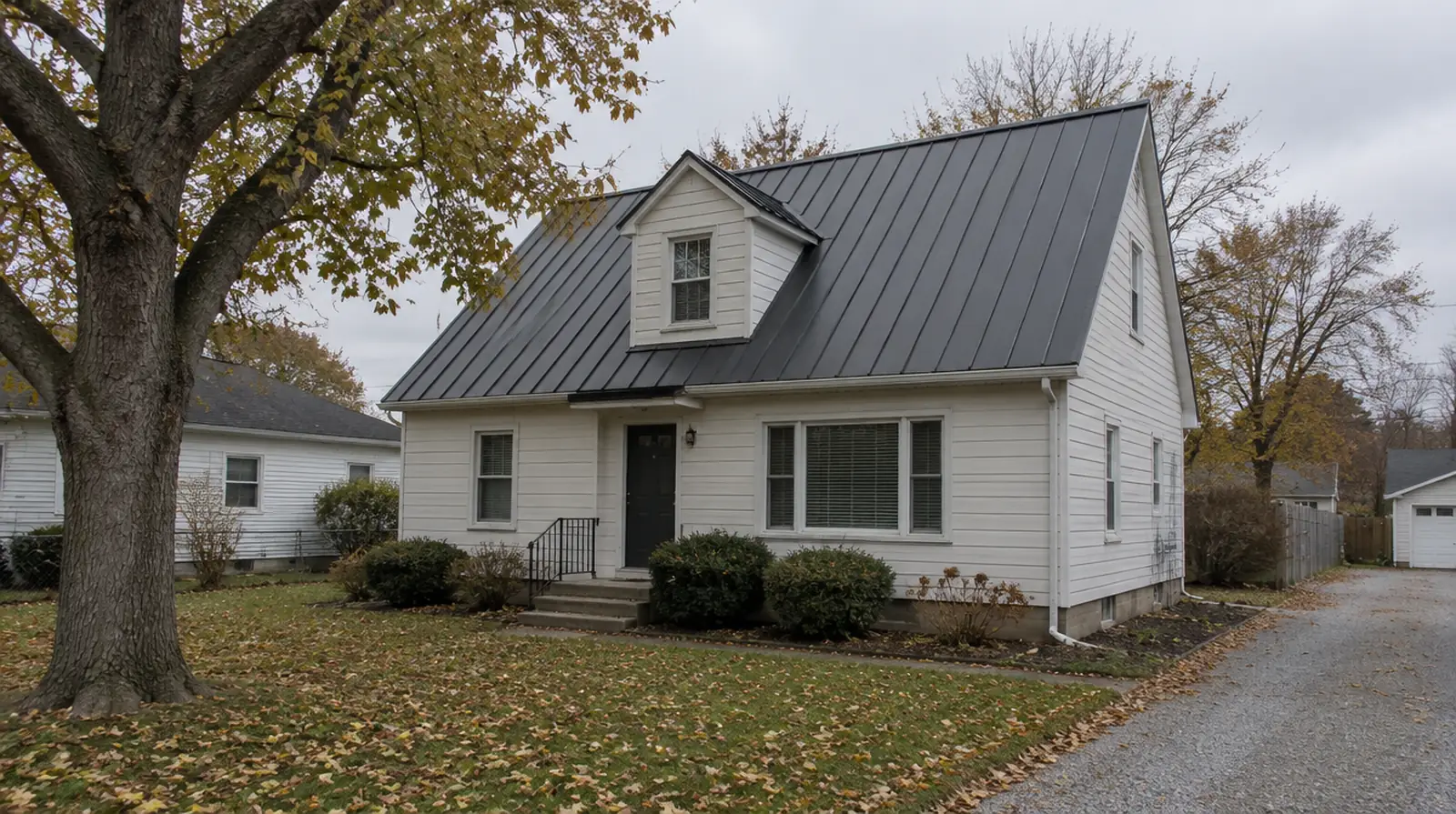
Two kinds of metal roof, and where each one belongs
Most of the metal roofs we put on in Anderson fall into two families. Standing seam panels lock together along raised seams, and the clips that hold them down are hidden under the seam. Nothing punctures the face of the panel, so there are no exposed screws to back out as the steel moves through hot July afternoons and January nights below zero. This is the system we recommend for a house you plan to stay in.
Exposed-fastener ribbed panels are the corrugated-style sheets you see on pole barns between Anderson and the county line. They go on faster and cost less, and they are a sensible choice for a detached garage, a shed or a lean-to. The trade-off is maintenance. Every panel is held by screws with rubber washers, and those washers dry out in the sun. Plan on checking and replacing screws every so often.
Why homeowners here are switching from shingles
A shingle roof in this part of Indiana works hard. Thunderstorms roll across the flat farmland with nothing to slow the wind down, freezing rain coats the eaves a few times a winter, and humid summers cook the granules off south-facing slopes. Many of the people who call us have already replaced shingles twice on the same house and do not want to do it a third time.
A well-installed steel roof is built to outlast several shingle roofs. It sheds snow instead of holding it, it does not curl or lose granules, and the painted finish reflects more summer heat than dark asphalt. Metal does cost more up front, usually two to three times what a shingle job runs, so we are honest about whether you will be in the house long enough for that math to work.
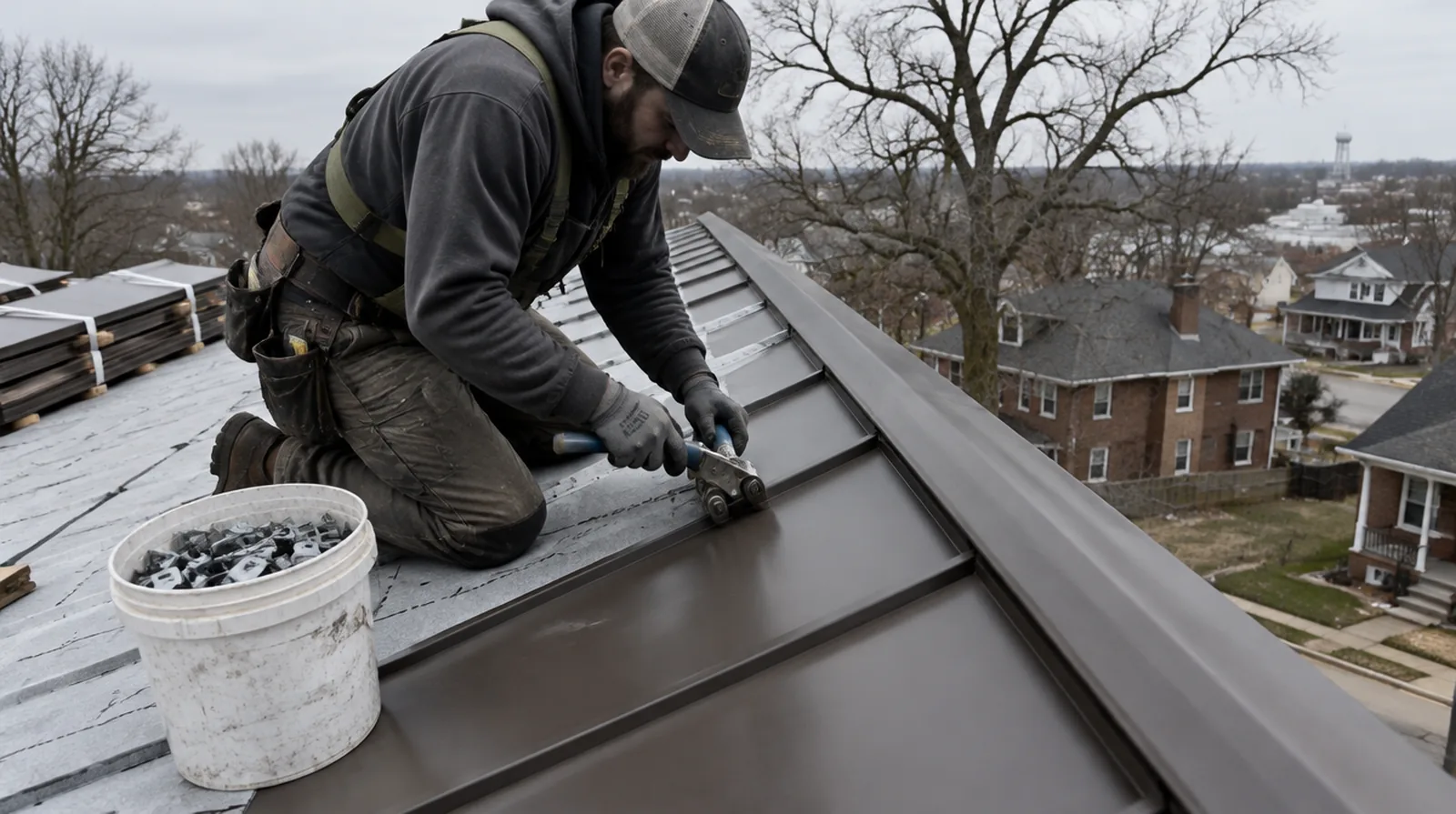
How we install a metal roof on an Anderson house
- Tear-off and deck check. We remove the old roofing down to the boards. Plenty of houses near downtown still have plank sheathing with gaps between the boards, and some have soft spots around old chimneys. We repair or sheet over that so the panels sit on a flat, solid surface.
- Underlayment. A self-adhered ice barrier goes along the eaves, in valleys and around penetrations. A high-temperature synthetic covers the rest, because steel gets hotter than shingles in direct sun.
- Trim first. Drip edge, eave trim and valley metal go down before the panels, so water always runs over a lap rather than into one.
- Panels and clips. Panels are cut to length for each slope and fastened with clips that let the steel expand and contract. Seams are locked with a seamer as we go.
- Flashing and ridge. Chimneys, sidewalls and plumbing vents get flashing made for metal. A vented ridge closure finishes the peak and keeps the attic breathing.
Snow, ice and the sliding question
Snow that would sit on a shingle roof for a week will slide off steel the first sunny afternoon. That is good for the roof and bad for anyone standing under the eave. On most homes we add a row of snow guards above entry doors, walkways and the driveway so the snow lets go in smaller pieces. Gutters on the lower edge also need sturdy hangers, or a sheet of sliding ice can bend them.
Hail and dents
Hail is the question we hear most. Steel panels resist punctures far better than asphalt, but a big enough stone can still leave a cosmetic dent, especially on thinner panels or flat profiles. Heavier gauges and panels with stiffening ribs hide dimpling better. If hail resistance matters to you, ask us about panels tested to the UL 2218 Class 4 impact standard, and check with your insurer about how they treat a metal roof.
Permits in Anderson
Inside city limits, a reroof needs a building permit from the City Permit Center, where roofing is one of the work types on the residential structural permit. We pull it as part of the job. If your property sits outside the city in unincorporated Madison County, the county planning office handles permits instead, and we take care of that application too.
Colors, finishes and what they cost
Painted steel comes in dozens of colors. Charcoal, dark bronze and burnished slate tend to look right on older brick and frame houses, while lighter grays and tans keep attics cooler. The paint system matters as much as the color. A PVDF (often sold as Kynar) finish holds its color far longer than a basic polyester paint. What moves your price most:
- Standing seam versus exposed-fastener panels
- Steel gauge and paint system
- Roof size, pitch and the number of valleys, dormers and chimneys
- Deck repairs found after tear-off
- Snow guards, gutters and extra trim
Metal roofing questions
Is a metal roof loud in the rain?
Not when it goes over a solid deck and underlayment, the way we install it. Most people notice little difference from shingles inside the house.
Can you put metal over my old shingles?
It can be done on some outbuildings, but on a house we prefer a tear-off so we can see and fix the deck.
Do you roof pole barns and garages?
Yes. Ribbed panels are a good fit for barns, sheds and detached garages, and we can match the house color if you like.
Not sure whether your current roof is worth another repair? Start with a roof inspection, or compare costs with a standard roof replacement in shingles.
Thinking about a metal roof?
Call (765) 548-3717 and we will measure the roof, bring panel and color samples and give you a written price.