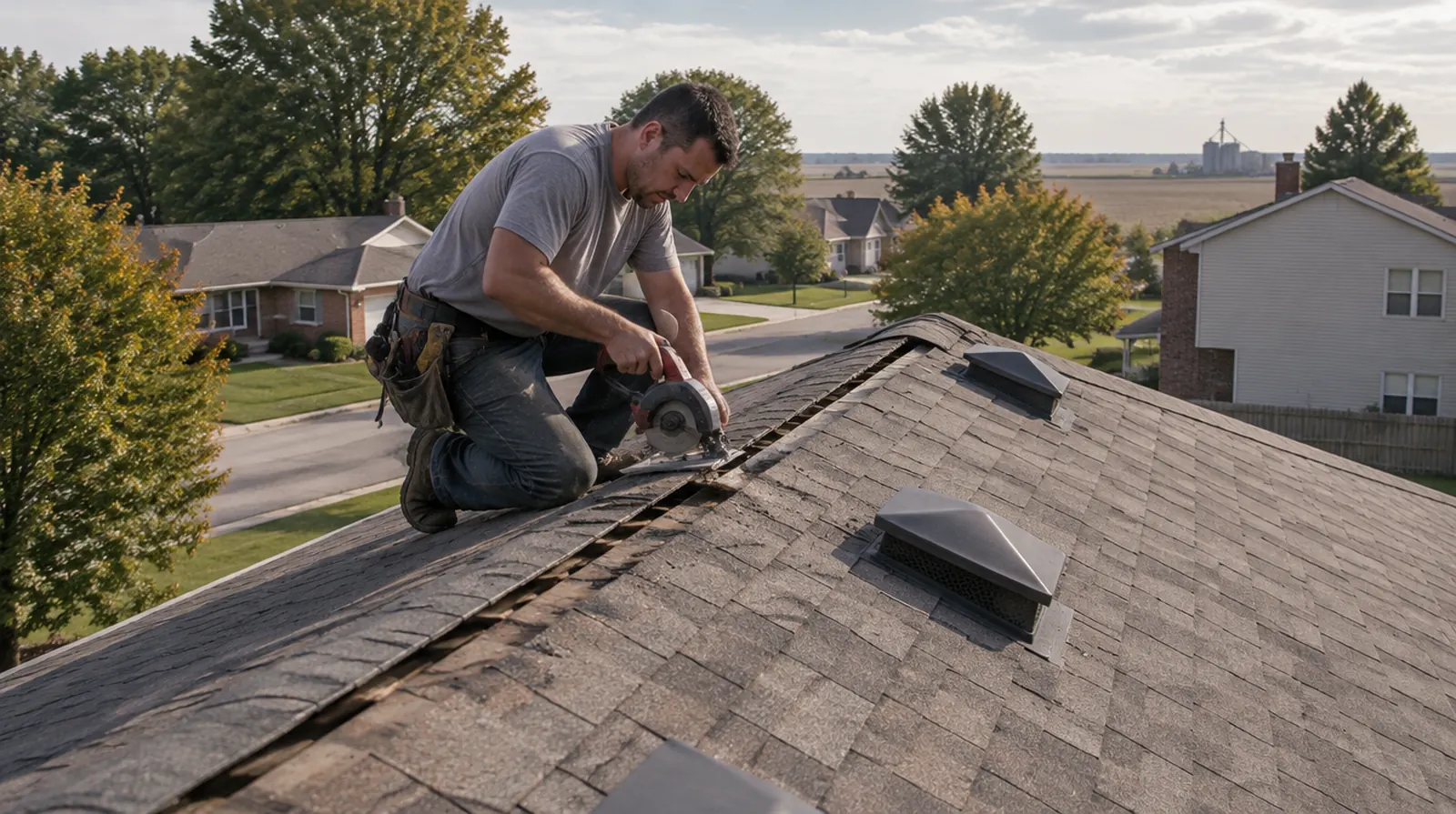
What roof ventilation work involves
Good attic ventilation is simple in principle: cool outside air comes in low through the soffits or eaves, rises as it warms and leaves high through a ridge vent or other exhaust near the peak. In practice, many attics have blocked soffits, too little intake, mismatched exhaust vents or insulation crammed into the eaves. We find those problems and design a system with balanced intake and exhaust.
Work may include installing a continuous ridge vent, adding soffit or edge vents, putting baffles in each rafter bay to keep insulation clear and closing off old vents that disrupt air flow.
Our roof ventilation process
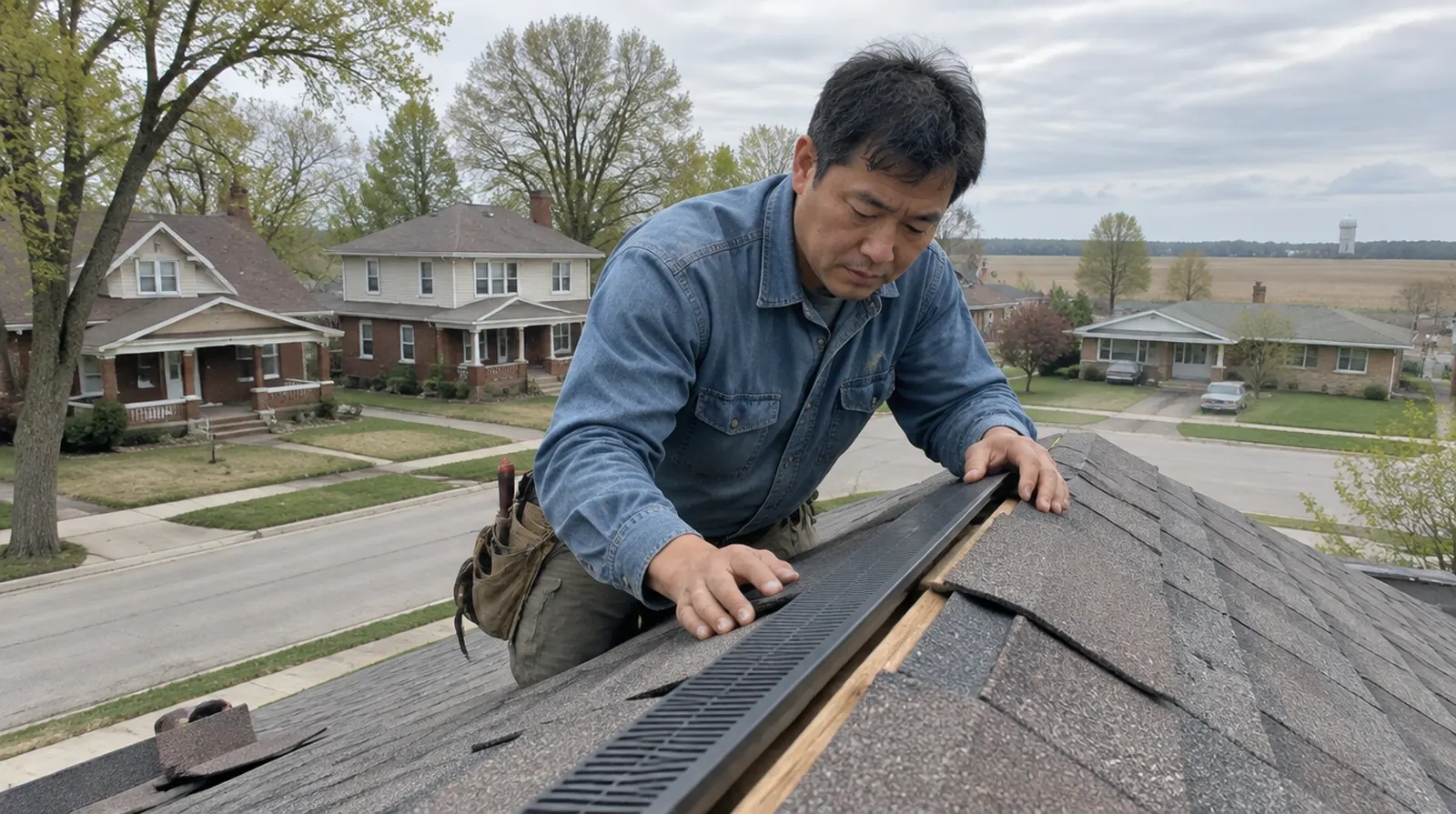
We start with a look in the attic, checking for frost marks, dark stains, damp insulation and how warm or cold it feels. We note where bathroom and kitchen fans vent, since fans that dump into the attic add a lot of moisture. Outside, we check the soffits, existing roof vents and gable vents. With that information we calculate the vent area needed, explain the plan and give you a written price. Most ventilation work takes a day or less and fits neatly into a roof replacement.
When better ventilation is needed
- Ice dams form along the eaves in winter.
- Frost or drips appear on the underside of the roof deck.
- Upstairs rooms stay hot all summer.
- Shingles are curling or blistering early.
- The attic smells musty or has dark spots on the wood.
Why ventilation matters in this heat
Hot, humid Indiana summers can push attic temperatures far above outdoor levels when there is no way for heat to escape. That heat ages shingles from below and makes air conditioning work harder. In winter, warm, moist air from the living space rises into the attic and condenses on the cold deck, leading to frost, mold and wet insulation. It also warms the roof enough to melt snow that refreezes at the eaves. Balanced ventilation helps in both seasons.
What affects ventilation project cost
- Attic size and shape. Larger or chopped-up attics need more work.
- Soffit condition. Solid or painted-over soffits may need new vents.
- Insulation baffles. Installing them in every bay adds labor.
- Timing. Ventilation added during a roof replacement costs less.
A balanced system versus extra vents
Adding more vents without a plan can make things worse. A ridge vent combined with box vents and gable vents can let air enter and leave near the peak without ever pulling fresh air up from the eaves. Powered attic fans can draw conditioned air out of the house through ceiling gaps. We aim for one balanced path. If new asphalt shingle roofing is in your plans, include ventilation in the same job. If you have stains, a leak repair visit can tell whether water came from outside or from condensation.
Ventilating story-and-a-half and older homes
Anderson's postwar story-and-a-half houses have knee walls and sloped ceilings that leave little room for air to move. Older Victorians may have no soffit vents at all. For these homes we use vent channels in the sloped ceiling bays, edge vents above the gutter line where soffits are missing and careful sealing of gaps from the rooms below.
What you can spot from the yard
A few clues show up without climbing into the attic. After a light snow, look for bare patches near the peak while the rest of the roof is still white; that often means heat is escaping from the house. Rows of icicles along the gutters, peeling paint on the soffits and rusty nail stains on the fascia point to the same thing.
Roof ventilation FAQs
Will ventilation alone stop ice dams?
It helps, but air sealing and insulation are just as important for keeping the roof deck cold.
Should my bath fan vent outside?
Yes. Venting into the attic adds moisture that can cause frost and mold.
Can a ridge vent be added to my roof?
Often, yes, by cutting a slot at the peak and installing vent and cap shingles.
How do I schedule an attic check?
Call (765) 548-3717 to set a time.
Want the attic to breathe?
Call (765) 548-3717 for a roof ventilation look and estimate.