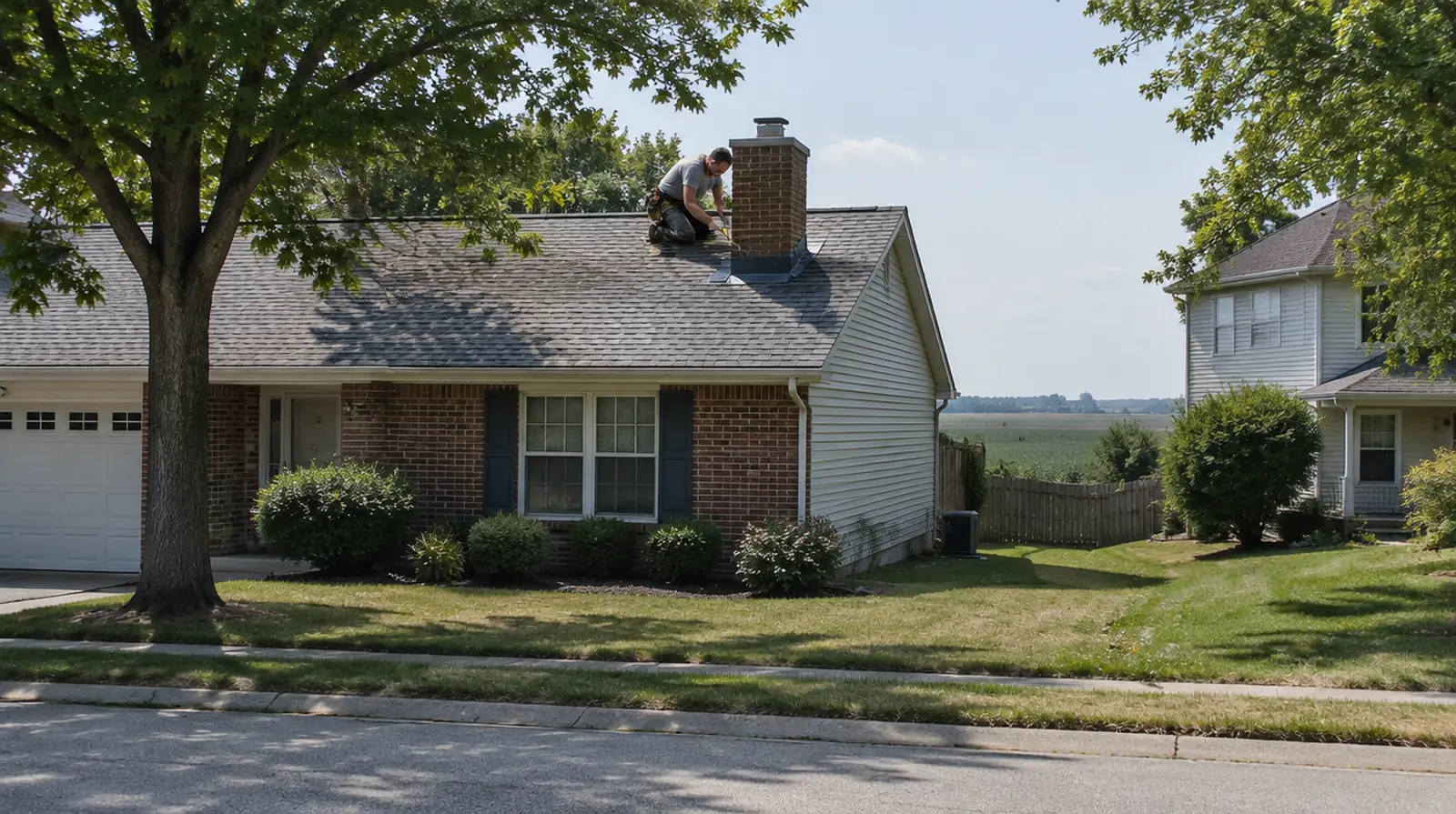
What goes into roof leak repair
Leak work starts inside and ends on the roof. We look at where the water shows, follow its trail in the attic and then examine the roof directly above that path. A stain on the bedroom ceiling might trace back to a chimney, a dormer wall or a vent several feet uphill. This walkthrough on tracing a roof leak to its source explains why the real fix so often sits away from the drip, and it is the same reasoning we use on every call.
Common leak sources here include chimney flashing on older homes, step flashing along dormers and walls, split rubber collars around plumbing pipes, shingles torn by wind and ice dams along the eaves in hard winters.
How we find and stop a leak
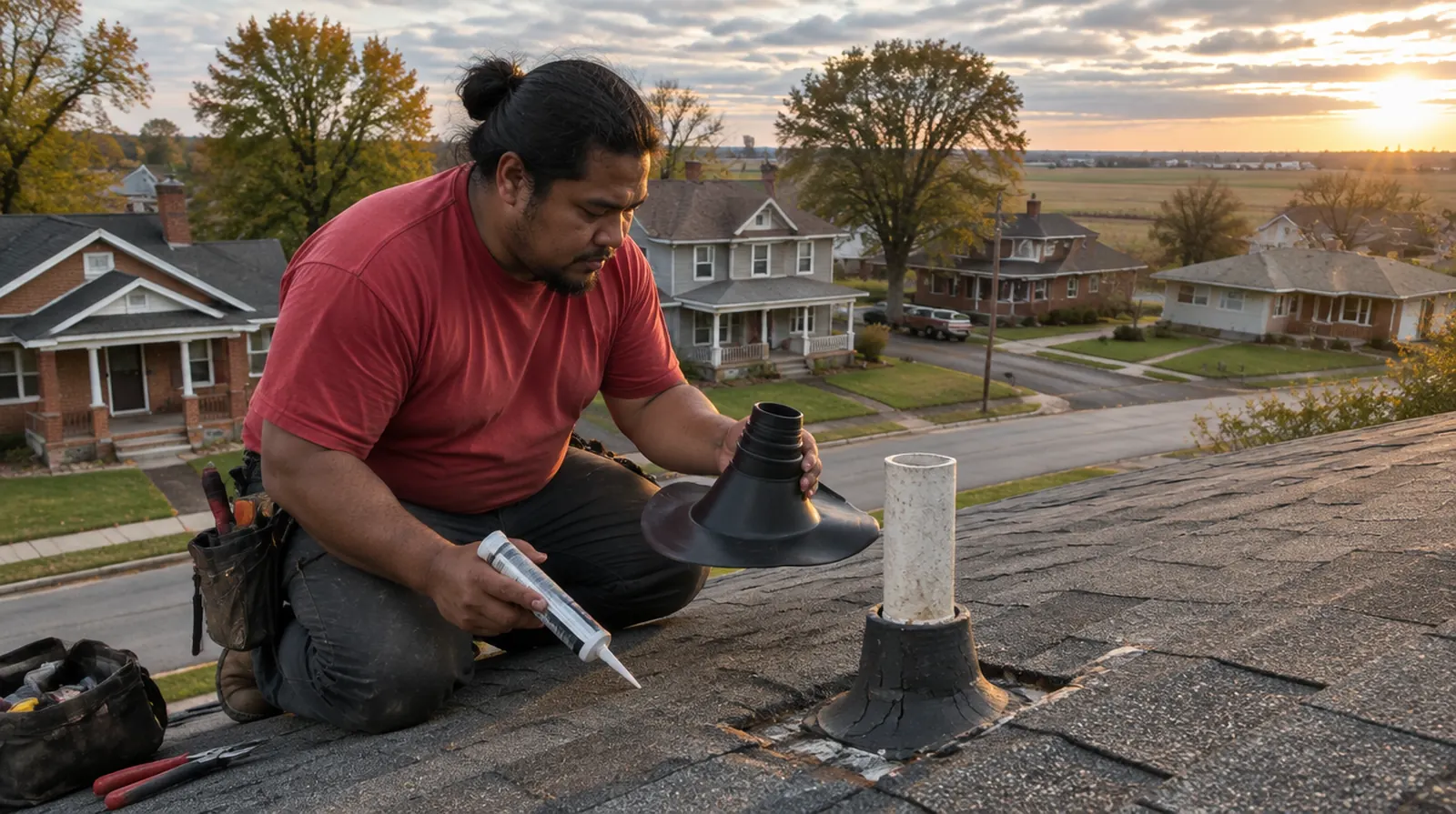
First we ask when the leak shows up: during heavy rain, wind from a certain direction, after a freeze or when snow melts. That narrows the search. In the attic we trace water marks back up the slope and look for wet insulation or dark spots on the deck. On the roof we check every opening and seam along the path.
When the source is not obvious, we may water test one area at a time while someone watches inside. Once confirmed, we remove the damaged shingles, replace failed flashing or collars, repair soft decking and reinstall the roofing so the area is sealed. You get photos showing what failed and how it was fixed.
When to call about a leak
- A ceiling stain is growing or feels damp.
- You hear dripping in the attic during storms.
- Paint is peeling near a chimney, skylight or window.
- Insulation looks wet or the attic smells musty.
Why leaks show up after a hard winter
Many Anderson leaks appear in late winter and spring. Freezing rain and freeze-thaw cycles loosen flashing and crack aging shingles all winter. Ice dams push water under shingles at the eaves. Then spring storms bring heavy rain and wind that drive water into every new gap at once. A leak that appears in March has often been building since December.
What affects leak repair cost
- Finding the source. Some leaks are obvious; others take testing.
- What failed. A collar is a quick fix; chimney flashing takes longer.
- Damage below. Rotted deck boards or soaked insulation add work.
- Access. Steep or tall roofs need more safety setup.
Temporary cover versus a lasting fix
If water is pouring in during a storm, we can tarp or seal the area to protect your home until the weather allows a permanent repair. That cover is a stopgap, not the repair. If leaks are showing up in several spots across the roof, it may be time to consider broader roof repair or a replacement instead of chasing one leak after another.
Chimney leaks on older Anderson homes
Tall brick chimneys on century-old houses are one of the most common leak sources we see. The mortar erodes, the crown cracks and the flashing at the roof line is often a patchwork of tar and old metal. We install new step and counter-flashing cut into the mortar joints, seal small crown cracks and let you know if the masonry needs a mason's attention.
After the leak is fixed
Wet insulation should be removed or dried so it does not hold moisture against the ceiling. We also look for signs that ventilation or attic air leaks are contributing to ice dams, since fixing those can prevent the next leak.
Roof leak repair FAQs
Can you find a leak that only happens sometimes?
Often, yes. Knowing when it happens helps, and water testing can confirm the source.
Do you repair leaks around skylights?
Yes. We reflash skylights and replace failed seals when needed.
Will my insurance cover it?
That depends on your policy and the cause. We provide photos and notes for your agent.
How quickly can you come?
Call (765) 548-3717 and tell us if water is coming in.
Have an active roof leak?
Call (765) 548-3717 and tell us what you are seeing. We will set a time to trace it.