What a roof coating is, and what it is not
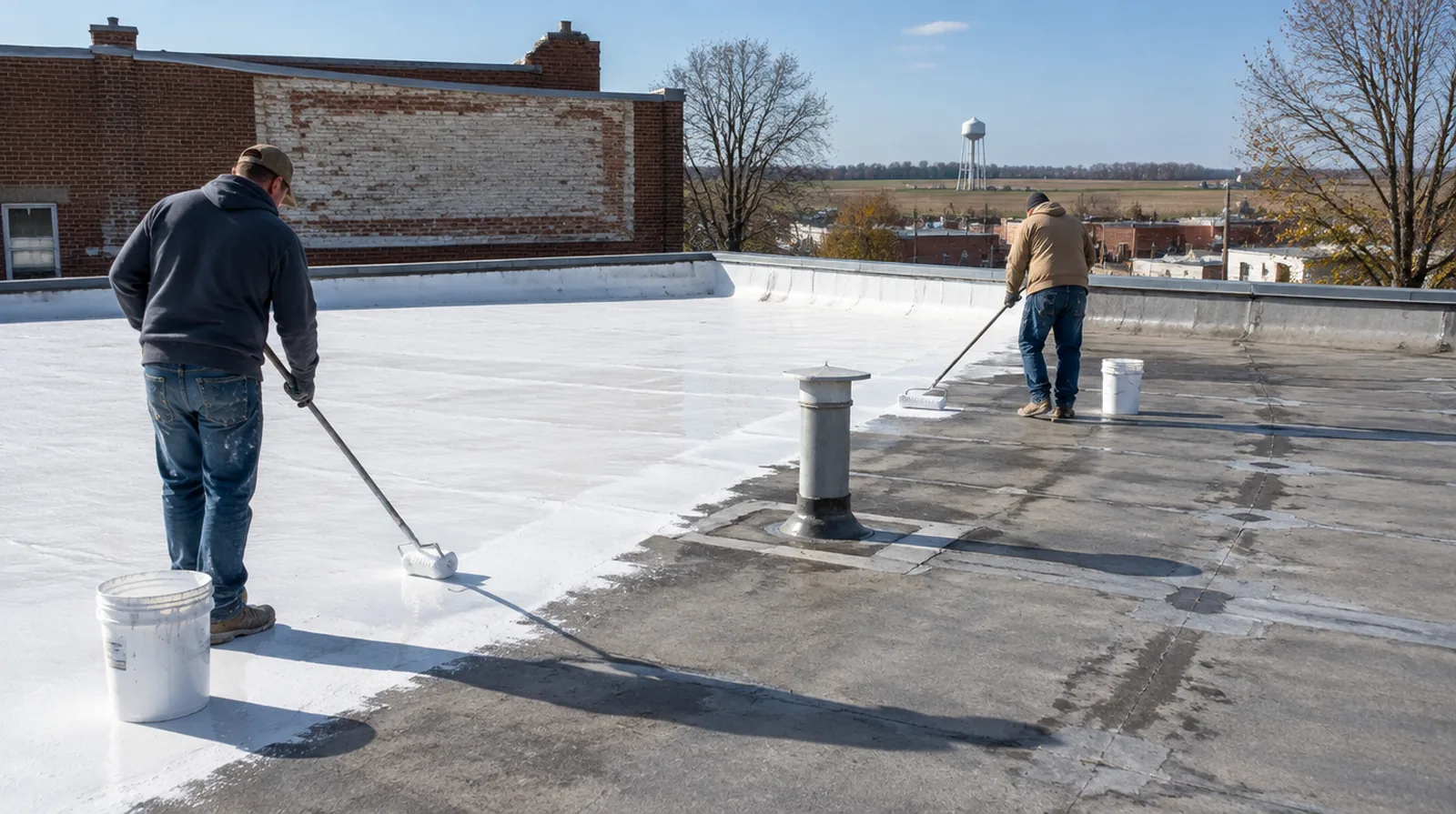
A roof coating is a liquid membrane rolled or sprayed over an existing roof. It dries into a seamless, waterproof, reflective layer that bonds to the old surface. Common types are acrylic, silicone and urethane coatings. When the roof underneath is sound, a coating seals small leaks, protects against sun and weather and can lower the roof's surface temperature.
It is not a cure-all. A roof with soaked insulation, rotten decking or large areas of failed seams needs more than a coat. Part of our job is to say so honestly after testing, before you spend money on something that will not hold.
Why coatings make sense in Anderson
Anderson sits in east-central Indiana, where the weather swings widely. Winters are cold with freeze-thaw cycles that open seams and push water into cracks. Summers are humid and warm, and spring storms bring hail and heavy rain. Flat roofs here often hold water, which speeds wear on old membranes and rusts exposed metal. A fresh coating sheds water better, seals cracks and protects the surface from ultraviolet light.
The city's industrial past also matters. Many buildings, particularly around the old manufacturing districts and downtown, have built-up tar-and-gravel roofs, older single-ply membranes and metal roofs that have been patched several times. Coatings can restore these without a costly full replacement.
Roofs we coat around Anderson
- Flat and low-slope commercial roofs on shops, offices, apartments and churches in town and along Scatterfield Road and Meridian Street.
- Metal roofs on barns, shops and warehouses in surrounding Madison County, where fasteners back out and rust spots form.
- Older built-up and modified roofs that are still dry underneath but weathered on top.
- Roofs over additions and porches that have low slopes and cause chronic leaks.
Our coating process
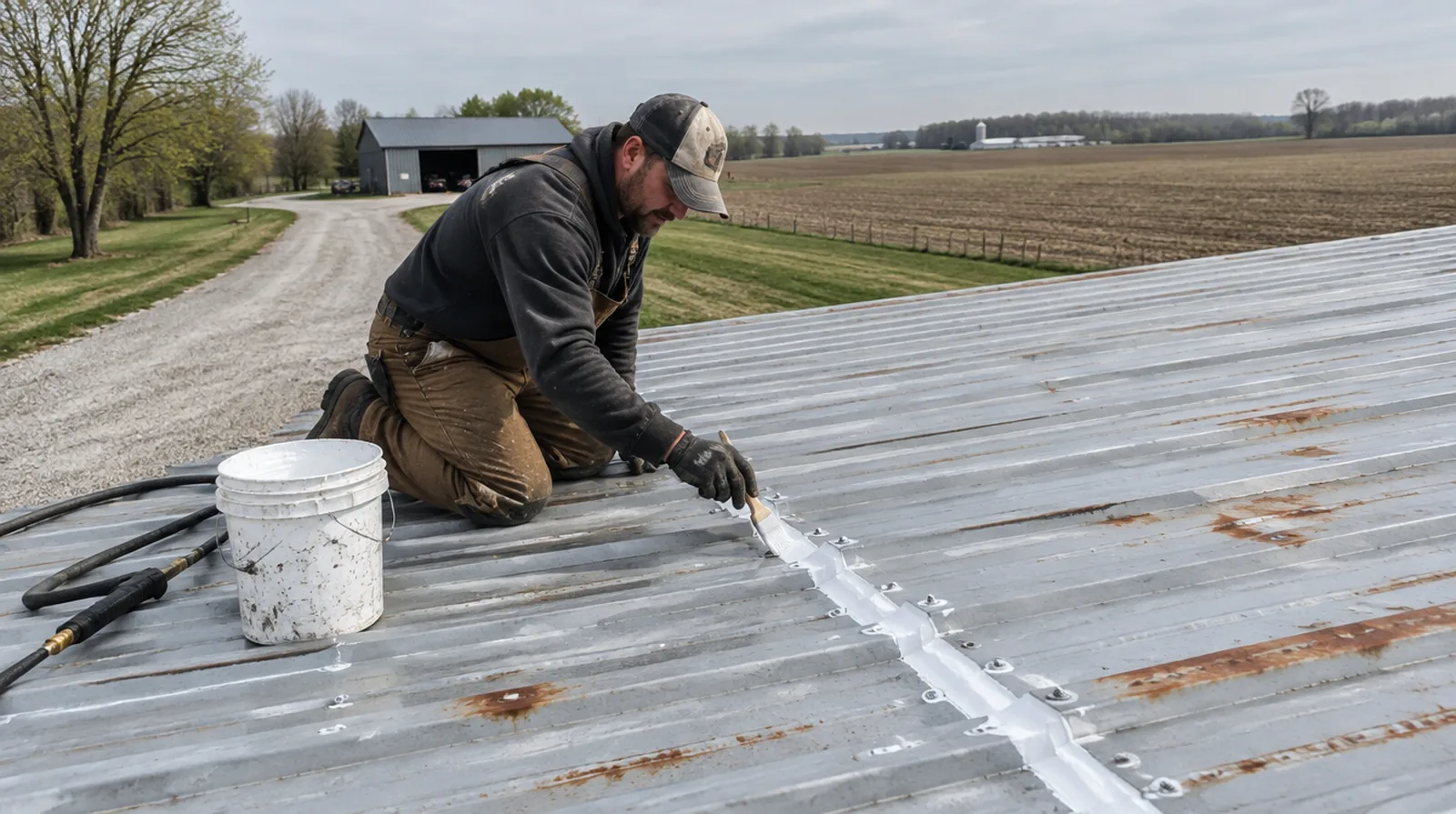
Inspection and moisture check. We walk the roof, mark blisters, open seams, ponding and rust, and test the insulation for moisture with a scanner or core samples.
Cleaning. We pressure wash the roof to remove dirt, algae and loose granules. A clean surface is key for adhesion.
Repairs. We re-fasten loose metal, replace bad flashing and seal seams, penetrations and edges with reinforcing fabric and mastic.
Primer if needed. Some surfaces, such as rusty metal, need a primer for a strong bond.
Coating. We apply two coats in a crosswise pattern to a measured thickness, so there are no thin spots.
Final walk. We check the roof, clean up and give you a written record of the system we installed.
Choosing the right coating
Acrylic is economical, reflective and easy to apply in dry weather, but it is not ideal where water sits for days. Silicone handles ponding water better and is very durable, though it is harder to recoat later and picks up dirt. Urethane is tough against foot traffic and hail. We will explain the trade-offs and choose based on slope, drainage and your budget. Where a roof is beyond coating, we may suggest a flat roof repair, or roof replacement.
Timing in Indiana
Most coatings need a dry surface and temperatures above about 50 degrees for the day and the following night. That makes May through October the main window, and the best results often come from late spring and early fall, when mornings are not too humid. Dew and rain can ruin a fresh coat, so we watch the forecast closely and stop when conditions turn.
Looking after a coated roof
Keep drains clear, clean off leaves and check the roof twice a year, especially after hail or a major freeze. Do not let trades walk on it without pads. Most coatings can be recoated in the future, so maintenance costs stay predictable. A roof inspection can confirm when it is time.
Common questions
Does coating stop leaks? It seals small leaks and cracks. We fix larger problems first.
Do you serve nearby towns? Yes, including Muncie, Alexandria, Pendleton, Lapel and Daleville.
Can the building stay open? Yes. Work happens on the roof, and coatings have little odor.
Find out if your roof can be coated
Call (765) 548-3717. We will check the roof, test for wet insulation and tell you whether a coating makes sense.